
如果 · IF: see a thousand futures before you choose
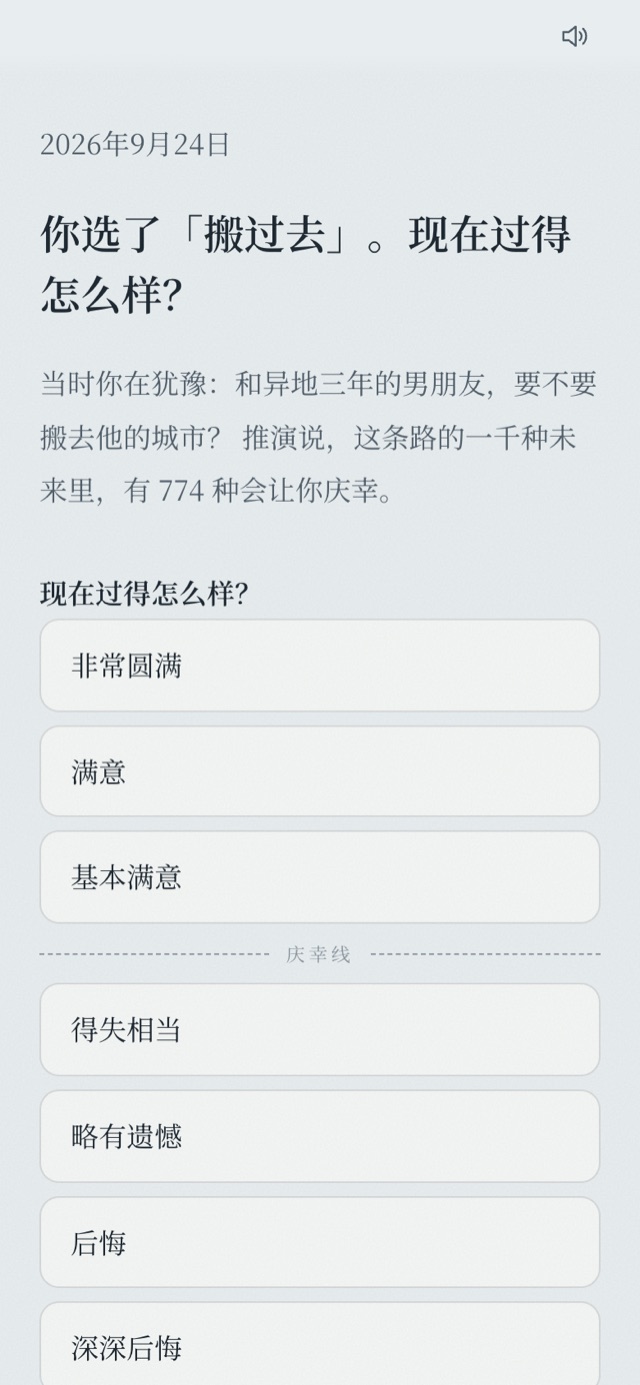
A decision tool for everyday choices, big and small. Say what you're torn about; it simulates 1,000 futures for each path with Jev (TypeSafe's System One model), draws where they land as a tree of ink threads, lets you read postcards from those futures and name how each one feels, then seals the choice and asks three months later how it actually went: the only honest test of whether its numbers mean anything.
如果 · IF
在做决定之前,先去一千种未来里看看。
Free · works in any phone browser · Chinese interface · built to become a WeChat mini-program
Everyone knows the feeling of being stuck between two paths: a job in another city or staying for grad school, moving in or staying long-distance, hotpot or barbecue tonight. Asking a chatbot mostly gets your own opinion handed back, nicely worded. Fortune-telling apps are comforting and unfalsifiable. 如果 tries a third thing: show the spread of how each path could turn out, in numbers that can be checked later, and pay attention to how you feel when you read them.
- Futures per path
- 1,000
- Simulation time
- ≈ 2–5 s
- Model cost per decision
- ≈ $0.02
- Idea → live
- ≈ 1 day
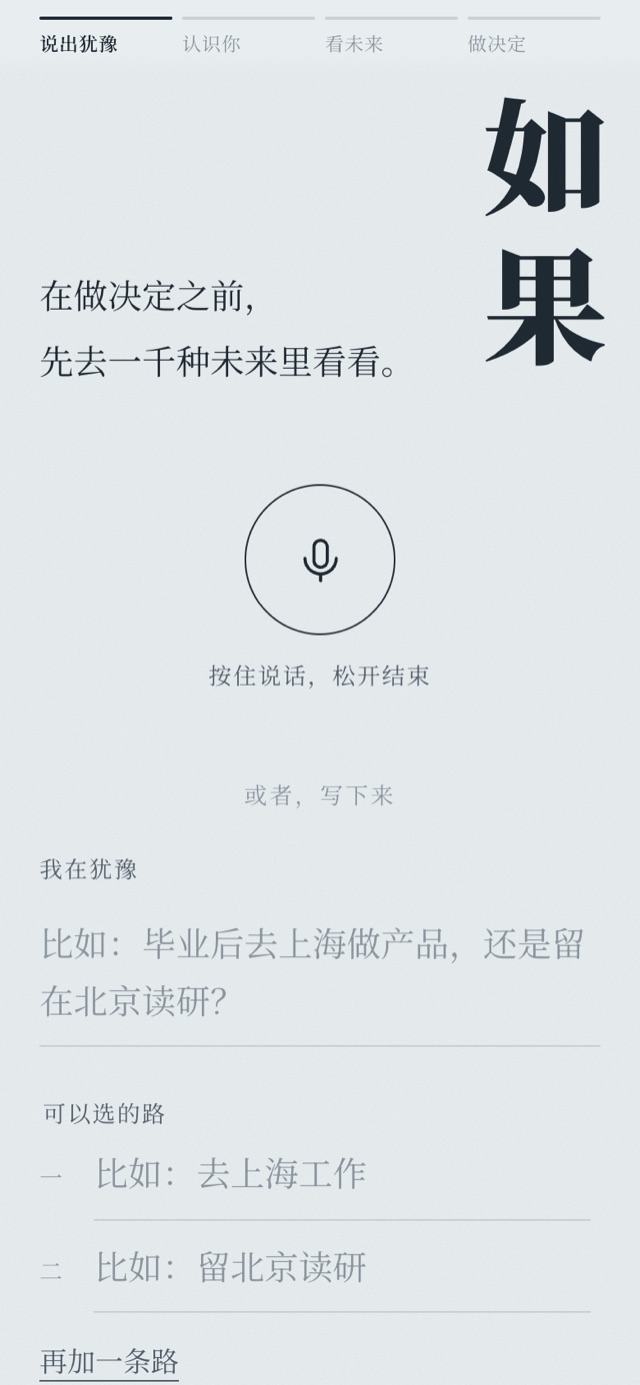

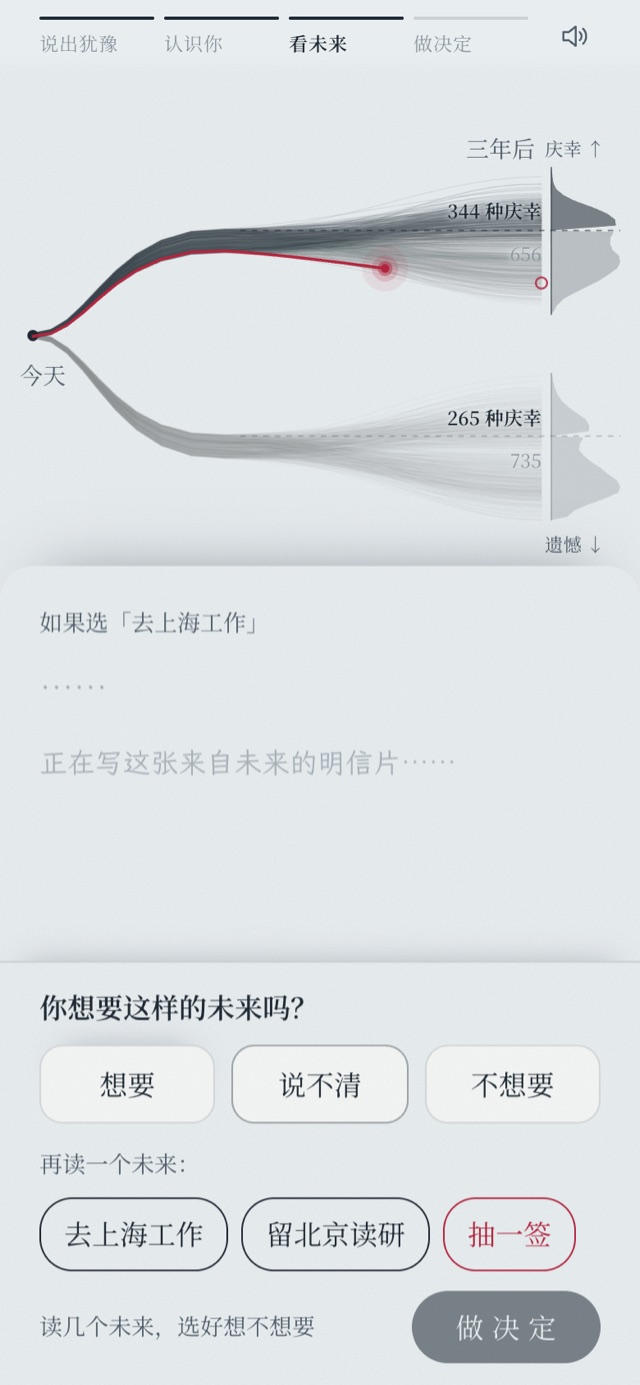
How the thousand futures are made
Language models are good at words and bad at honest numbers. Jev, TypeSafe's System One model, is the opposite: it never writes a sentence, it returns calibrated probabilities over options you define, in about 100 ms, for fractions of a cent. So the work is split:
- Qwen names the 6–8 uncertainties that decide this particular choice (industry outlook, money, health, the people around you; or appetite, weather and company for tonight's dinner), each with states ordered from worst to best, and picks a sensible horizon: tomorrow morning for dinner, three years for a job.
- Jev gives the odds of each state under each path, given who you are.
- Code samples 1,000 combinations per path from those odds.
- Jev scores how each distinct future would feel, over seven levels from deep regret to fulfilled, about 40 futures per call, all in parallel.
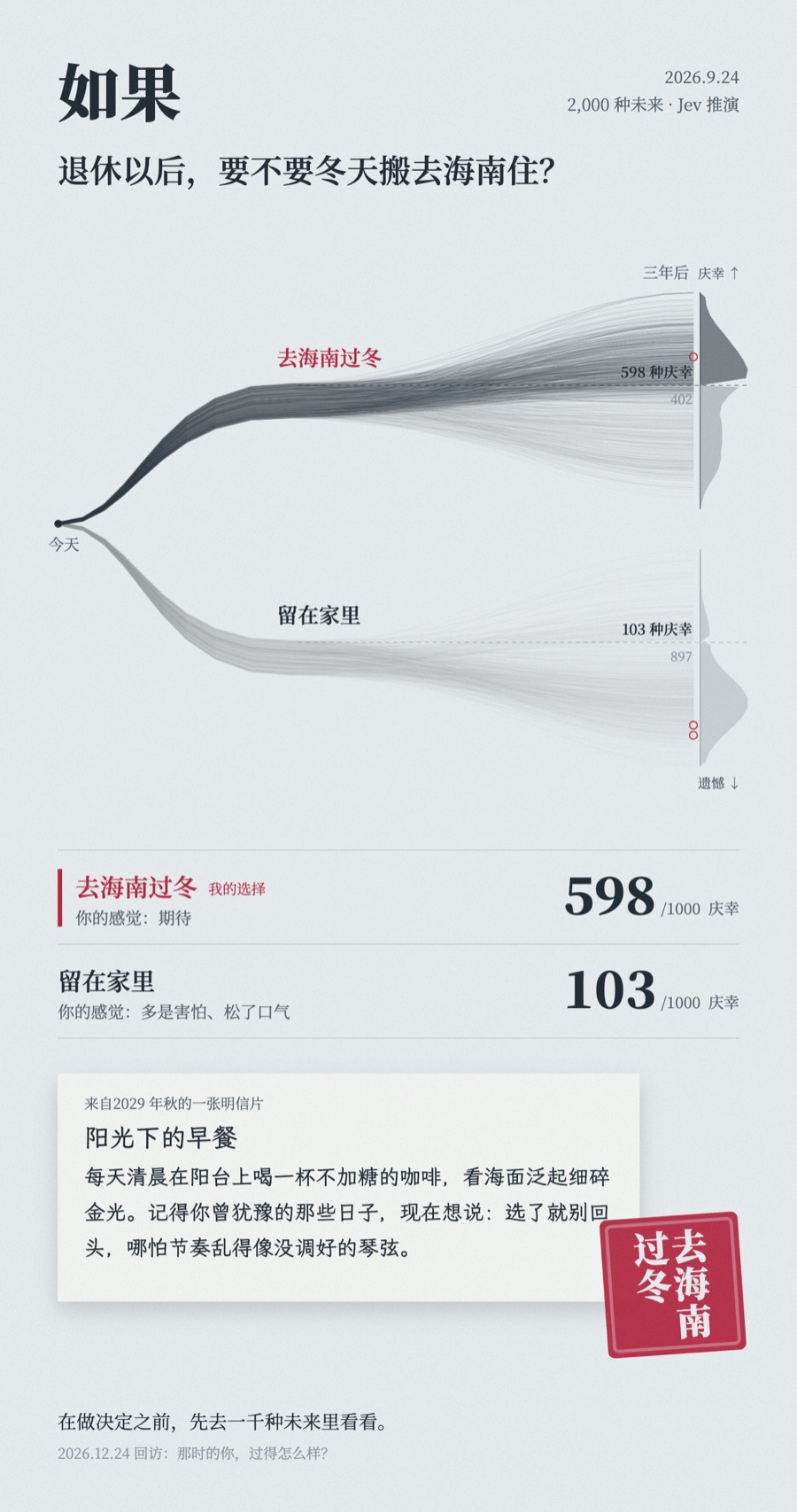
- Code draws the tree, counts the glad futures, and finds levers: tap "先争取三个月实习" and the whole tree re-weights instantly, without a new model call.
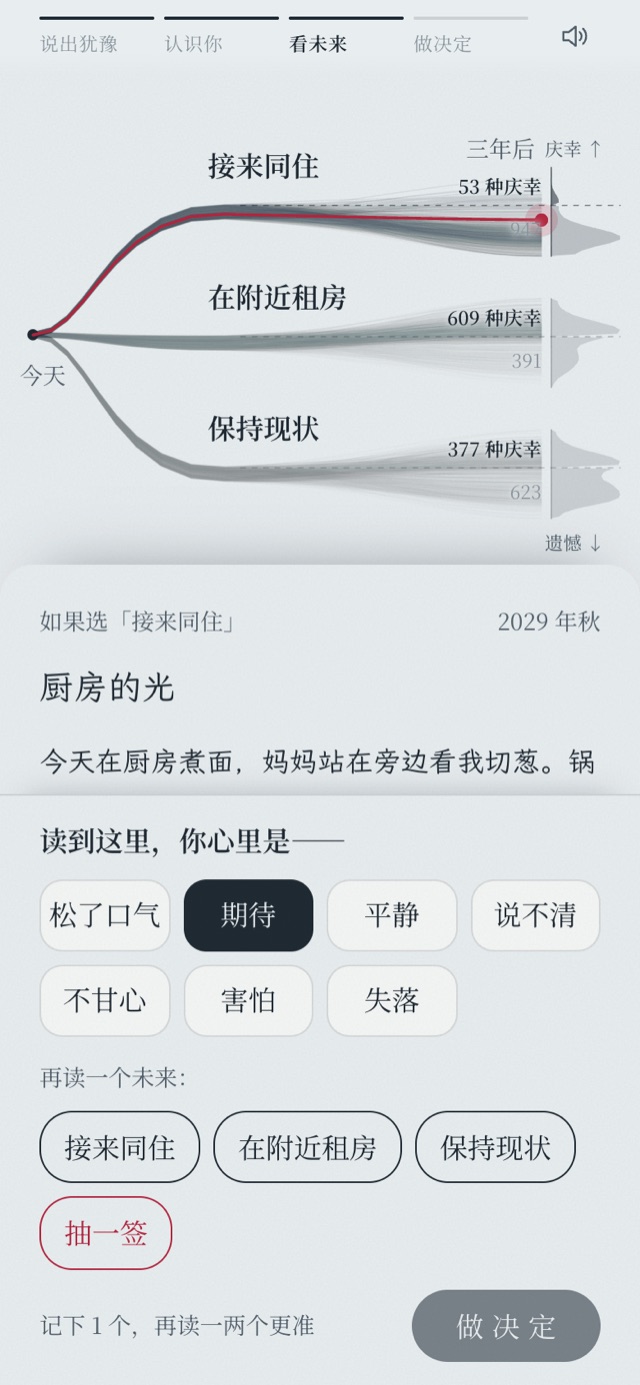
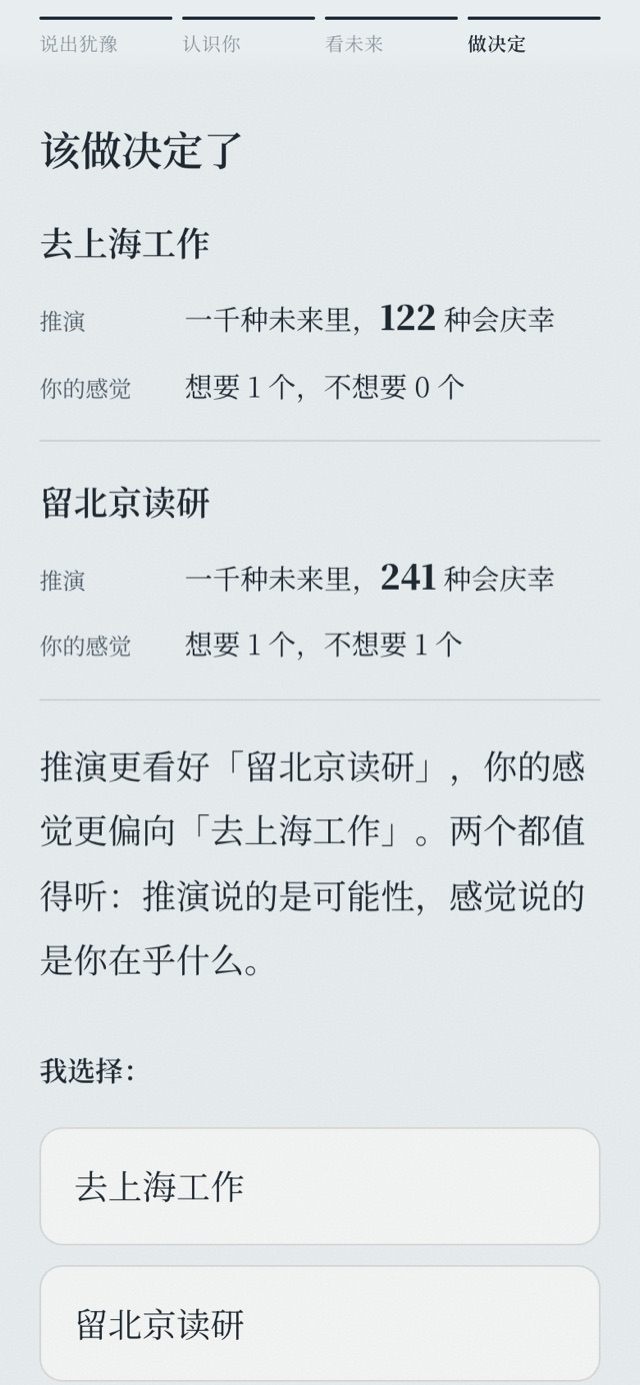

Design choices I care about
- For anyone, any age. Four plain steps, one question per screen, voice input (Qwen3-ASR, so it works in China), buttons named in words. An earlier version had five breathing rituals; early feedback said it was tiring, so there is one breath now, and it never asks you to hold it while the server thinks.
- 宿命感, without lying. A generated pentatonic soundscape, a lottery-wheel draw that slows and lands with a temple bell, a seal that thuds down with a splash of ink. The drama is in the presentation, never in the numbers.
- Honest about calibration. Re-running the same plan moves a count by about 1%. A freshly generated factor plan moves it more, and answering 18 questions instead of 6 cuts the swing from any single answer by about 60%. But whether "598 of 1,000 glad" matches reality for life decisions is unproven, which is why every sealed choice comes with a calendar reminder and a check-in that records what actually happened.
How it is built
- Front end. Plain JavaScript, no framework. The thread renderer uses only
the Canvas 2D calls that WeChat's
<canvas type="2d">supports, so the simulation core and renderer move to a mini-program unchanged. - Back end. A small Node service, deployed as Vercel Functions, with per-visitor rate limits. Qwen on Alibaba Cloud Bailian for words and speech; Claude is a drop-in alternative.
- Market research first. Before writing code I looked at how people decide today, in English and Chinese communities: the sycophancy complaints about chatbots, the 赛博算命 wave, 测测's business model. The consistent gap was a fortune-teller that shows its track record.
如果 is new and still changing. Try it on something small first. Tonight's dinner is a fine place to start.