
RallyAI: an on-device AI tennis coach for iPhone, Apple Watch and WeChat
A tennis-training companion that runs swing detection, ball-speed estimation, placement and technique scoring entirely on the iPhone Neural Engine, so video never leaves the phone. Built as a founder: iOS and Apple Watch app with nine Core ML models, an AI coach, a WeChat mini program and web client, a projector-first practice-court mode, and a Bluetooth ball-machine controller.
RallyAI
Your AI tennis coach. Right in your pocket.
iPhone + Apple Watch · WeChat mini program 「RallyAI 网球智能分析」 · Global site rallyai.ai · China site rallyai.com.cn
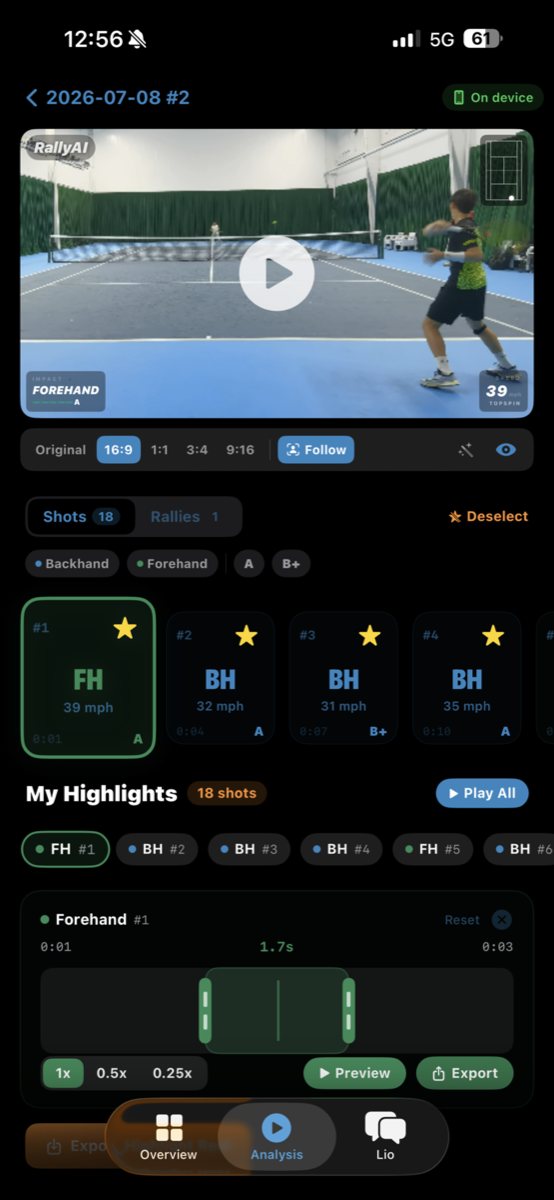
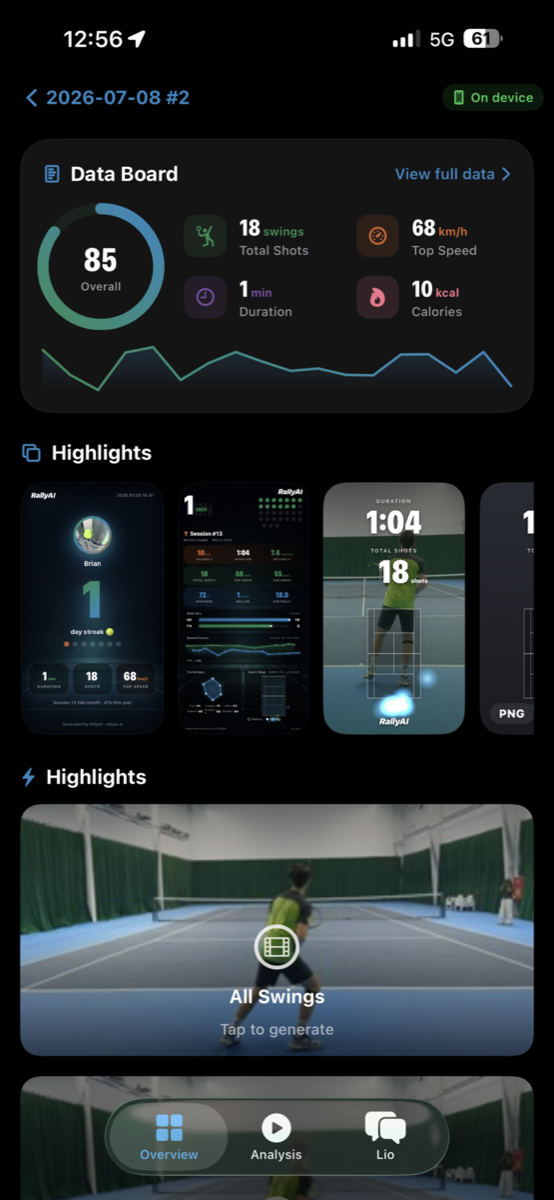
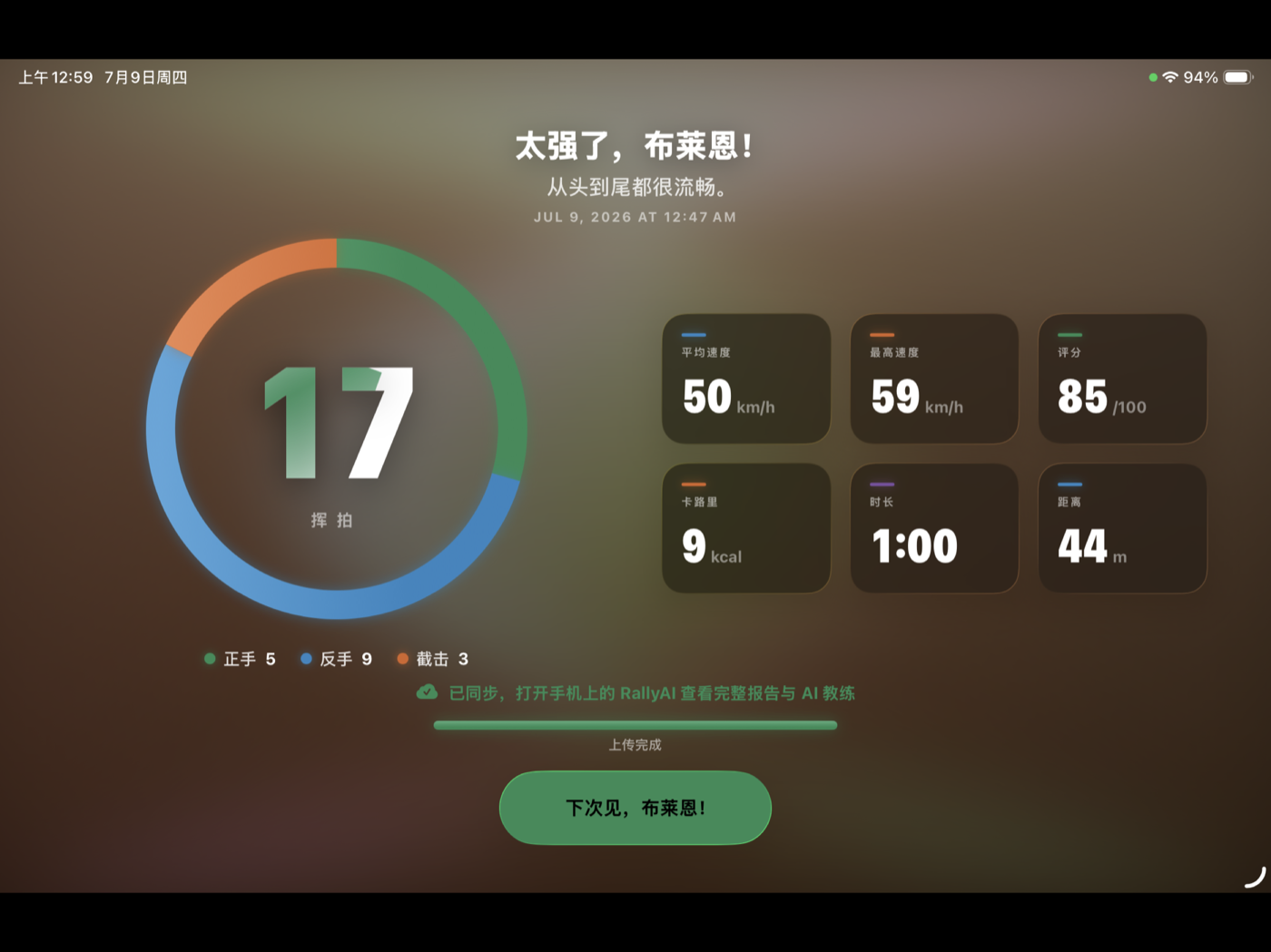
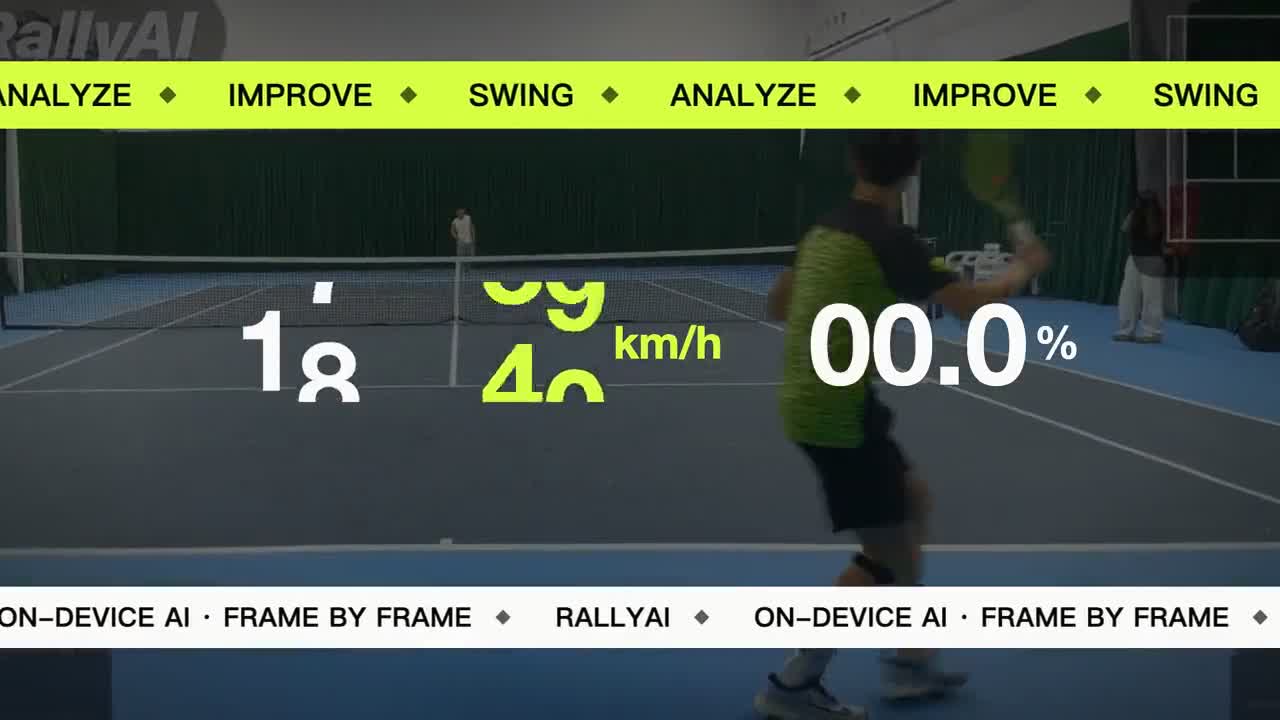
Film a rally on your phone. A minute later you know which shots were forehands and backhands, how fast the ball left the racket, where it landed, and which swings earned an A and which a B+. No upload, no waiting on a server: every model runs on the iPhone's Neural Engine, and the video never leaves the device.
- Core ML models on device
- 9
- 1-minute clip analysed in
- ≈ 60 s on iPhone 15 Pro
- Platforms
- iOS · watchOS · WeChat · H5
- Commits across repos
- 300+
What it does
- Swing analysis. Swing type, ball speed, placement and in/out calls, and a technique grade per stroke, with slow-motion replay of the moments that matter.
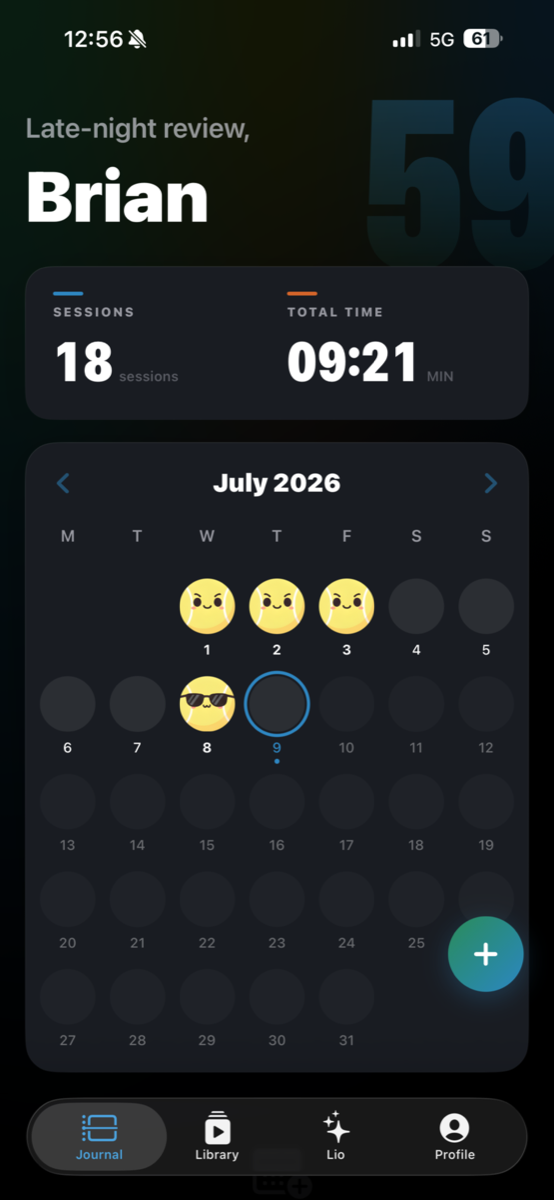
- Apple Watch recording. Start a session from the wrist; the journal and data board fill in on the phone.
- AI coach. "Lio" turns the numbers into a conversation: what to work on, and why, grounded in the session's own data.
- Doubles and venue mode. Player re-identification for doubles (beta), and an iPad mode for clubs that pairs with a projector and a ball machine.
The computer-vision stack
The first version ran as a PyTorch web pipeline. Moving it on-device meant converting and, in places, redesigning five models, then adding four more as the product grew:
| Task | Model on device |
|---|---|
| Player pose | YOLO11-pose / YOLO26-pose |
| Court detection and homography | Custom court detector |
| Ball tracking | MotionNet, an EfficientNet-B0 FPN heatmap model over 9 stacked frames |
| Swing segmentation and classification | Swing model plus GCN + multi-stage TCN action heads (side and back views) |
| Camera view classification | Small CNN |
| Doubles re-identification | OSNet-AIN |
| Voice notes | SenseVoice ASR (int8 ONNX) |
Contact and landing points come from the court homography, and the temporal-action model started life as a Mamba design before being re-expressed as a transformer for Core ML. The trade-offs are documented in the repo as plans, not slogans: what was tried for ball tracking, what broke at 4 fps, what the doubles tracker still gets wrong.
More than the app
- China. A Vue 3 + uni-app codebase compiles to both an H5 web client and the WeChat mini program, with server-side overlay rendering, WeChat login and Qwen models standing in for OpenAI behind the same interface.
- RallyAI Studio. A projector-first, live-camera app for the practice court: motion-art effects, film grades, and a pose-driven mini-game, running MediaPipe Pose in the browser.
- Ball machine. A Web Bluetooth controller for Siboasi ball machines, with a reverse-engineered protocol driver and USTA-mapped training courses, built to plug into the iPad venue mode.
- CourtFlow. A multi-tenant venue platform for court booking, dynamic pricing and coaching, on FastAPI, PostgreSQL and WeChat Pay.
What I learned
Research taught me to measure before I claim. RallyAI taught me that a product is a research problem with a deadline: the model that wins a benchmark is not the one that fits in a phone's thermal budget, and the most useful evaluation was watching real players squint at an overlay and ask why. I built this as a founder, end to end, and it changed how I think about what "done" means for a model.
If you coach, run a club, or just play a lot and want to try it, the site has the details.